Strengthening the Salmonella Control Chain: Prevention from Farm to Fork
Libourne, 8 October 2026: Preventing Salmonella is about strengthening trust in safe, reliable food and safeguarding public health. Because Salmonella can be carried by poultry, prevention is not only a health issue; it’s a risk-management strategy.
By helping stop contamination in the food chain through vaccination and a One Health approach, Ceva Animal Health (Ceva) is helping the poultry industry reduce the likelihood of outbreaks traced back to specific farms or facilities, which can result in quarantines, recalls, and trade bans. Equally, effective prevention protects brand reputation by avoiding irreversible consumer mistrust and limiting severe legal liability for food producers and distributors.
What is Salmonella and why it matters for food safety.
Salmonella is a bacterium that can cause salmonellosis, an infection that affects humans after contamination of food or the environment. While some serotypes are host-specific and persist mainly within particular animal species, transmission is not limited to eggs alone: Salmonella can also be carried and spread via pork.
In Europe, the main human-facing concern is typically eggs, alongside egg-containing products, because they are a more common route of exposure. In animals, birds can often show no symptoms, except in young birds where signs are more evident, allowing the bacteria to spread silently within flocks through contact, the environment, feed, water, and pests.
Control starts at the source, in poultry production. However, although the Poultry and Egg industry has made strong efforts through improved hygiene and biosecurity measures to reduce Salmonella, diseases linked to contaminated poultry have not always declined at the same pace, suggesting that factors beyond customers may also play a role.
Prevention is not just a “farm problem”: it’s a public health priority
Salmonella Enteritidis and Salmonella Typhimurium are major causes of human Salmonella infections and are frequently linked to poultry products such as eggs. In some European countries, the prevalence of these strains in laying-hen flocks remains above the EU target of 2%.
Food safety incidents drive healthcare demand; the European Food Safety Authority (EFSA) estimates the overall annual economic burden of human salmonellosis could be as high as three billion euros. This reinforces why prevention must be treated as a shared responsibility across the full supply chain.
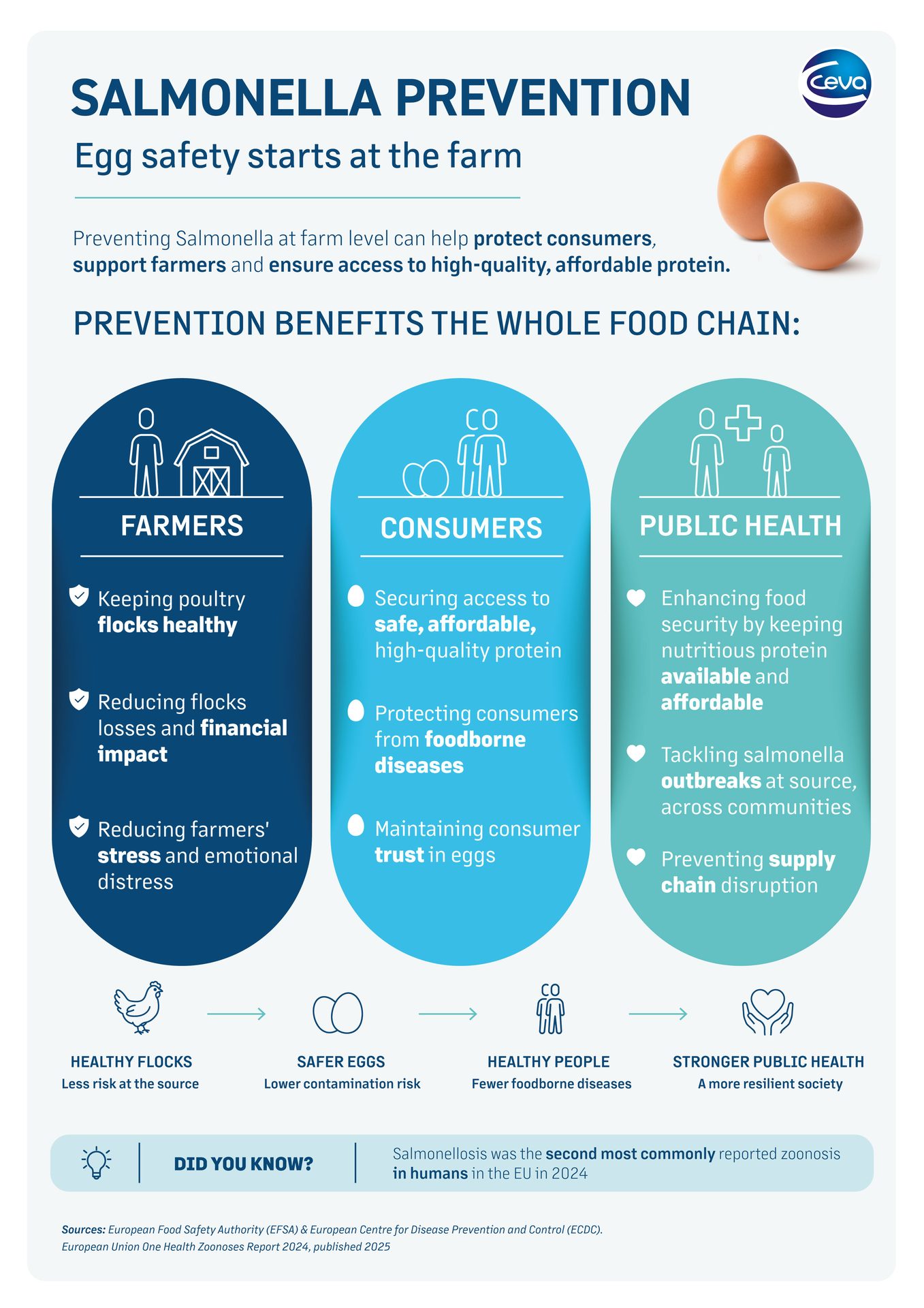
Effective Salmonella infection control aims to:
● Protect consumers through safe eggs and poultry products
● Reduce pressure on health services and prevent avoidable outbreaks
● Support farmers by reducing the risk of outbreaks that can disrupt their operations, affect productivity and create significant financial challenges, stress and emotional burden
● Support a stable food supply and maintain consumer confidence
● Strengthen food security by keeping nutritious protein affordable and available
When prevention measures are consistently applied, producers help maintain a reliable stream of safe, high-quality food, sustaining trust across communities.
Building lasting Salmonella control: From vaccination to biosecurity measures
Vaccination against Salmonella, combined with robust biosecurity and hygiene measures, helps reduce colonization, contamination and the horizontal and vertical spread of the bacteria, contributing to overall food safety.
For Salmonella control, programs may use different vaccine approaches depending on production needs. These methods include inactivated vaccines often administered by injection or live vaccines delivered via drinking water, designed to support systemic protection. Advanced equipment and monitoring tools ensure optimal vaccine distribution and high immunisation effectiveness.
Timing is critical; administration in the first week of life is widely recognised as essential for effective, lasting protection. It should be scheduled during calm periods, in healthy flocks, and when environmental stressors are minimal. Where vaccination schedules are not correctly followed, the risk of Salmonella persistence can rise.
These efforts align with the One Health approach, recognising that coordinated action across the poultry sector to reduce Salmonella helps minimize risks to human health, while supporting safer food, stronger communities, and lasting confidence in the supply chain.